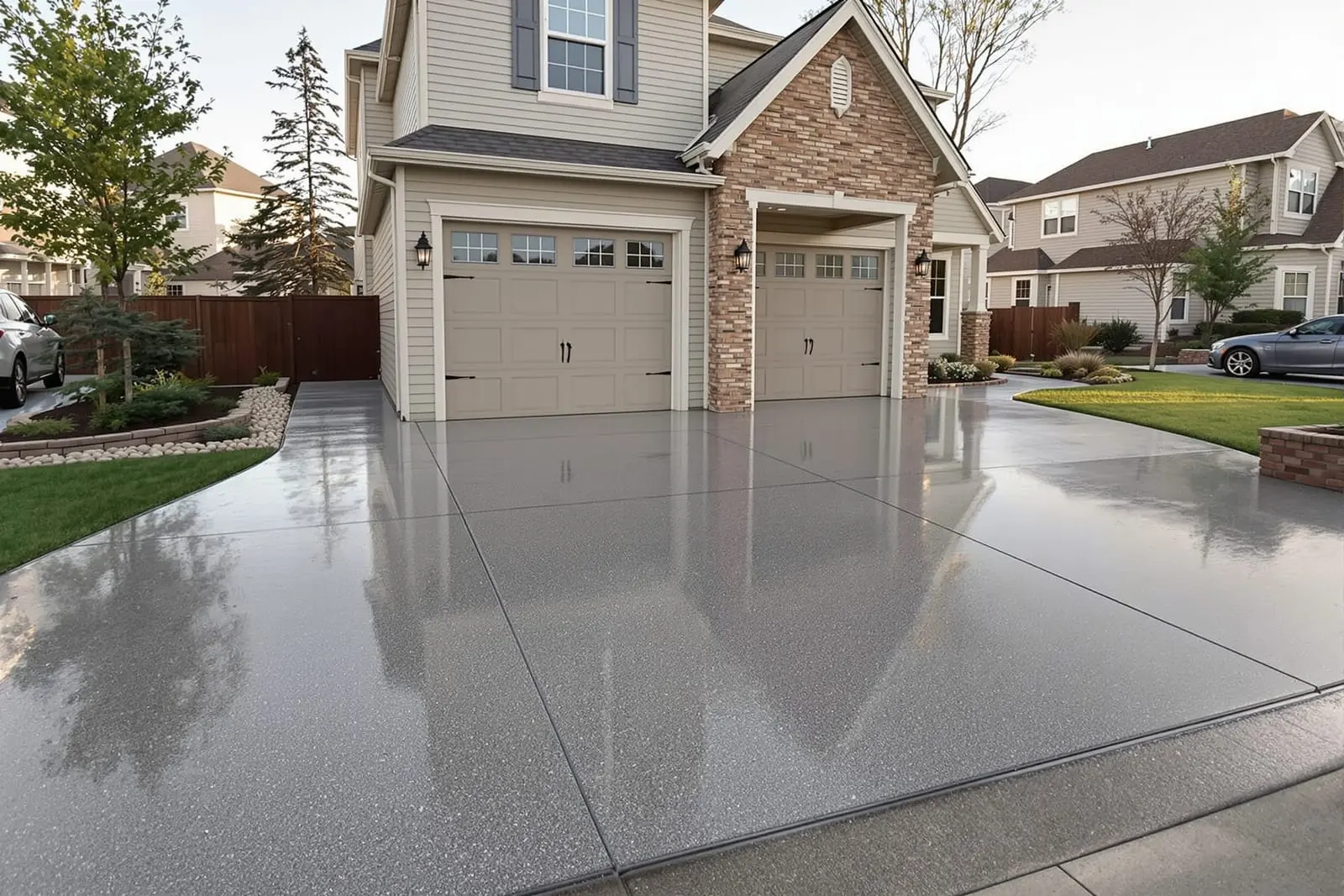
Upgrade your home with a durable concrete garage floor in Atlanta, GA. We pour and finish floors that stand up to vehicles, storage, and daily traffic. In basements, our flat, smooth slabs create a solid base for future finishing or storage. Count on consistent thickness, reinforcement, and a clean, low maintenance surface.
Primetime Concrete Atlanta provides professional concrete garage floor throughout Atlanta, GA and the surrounding area. Our licensed, insured crew delivers safe, clean, on-time work with a free estimate before anything begins. Call (470) 970-2915 or request your free quote.
Durable Concrete Garage Floors for Atlanta Homes
A concrete garage floor needs to handle real life in Atlanta, not just look good on day one. At Primetime Concrete Atlanta, we pour garage slabs that stand up to hot summers, occasional winter freezes, leaking car fluids, and heavy storage racks. We start by looking at how you actually use your garage: parking only, workshop, home gym, or a mix. That affects slab thickness, reinforcement choices, and finish.
For most attached garages in Metro Atlanta, we typically pour a 4 inch slab with proper steel reinforcement or fiber reinforcement, depending on load and budget. If you have a truck, boat, or heavy equipment, we may recommend thicker sections or additional rebar in traffic lanes. We also pay attention to slope. A small slope toward the garage door or a trench drain helps water from cars and pressure washing move out instead of toward your house or interior walls.
We use concrete mix designs that are appropriate for Georgia soil and climate. In our area, red clay and moisture movement can cause cracking if the base and joints are not done correctly. We compact the base, use a proper vapor barrier where needed, and cut or tool control joints at the right intervals. This guides minor movement into straight lines instead of random cracks across the floor. The result is a garage surface that will not crumble at the edges or spall under your tires.
Finishes range from a standard broom texture for grip, to machine troweled surfaces ready for future coatings or epoxy. We will explain the pros and cons honestly. For example, if you plan to install a high build epoxy system later, we may suggest a slightly rougher trowel finish for better coating adhesion rather than a mirror smooth surface that looks nice but does not hold coatings as well.
Basement Concrete Floors Built for Comfort and Moisture Control
Basement floors in Atlanta are a different situation than garages. Moisture in the soil, older foundations, and our humid climate all play a role. Primetime Concrete Atlanta approaches basement concrete floors with a focus on moisture management first, then comfort and appearance.
If it is a new build or a full gut renovation, we start with a compacted stone base and install a polyethylene vapor barrier under the slab to reduce moisture coming up through the concrete. In existing basements where the slab is being replaced or overlaid, we test for moisture levels and discuss drainage issues. If you have ever seen damp spots, musty odors, or flaking paint near the floor, we look for where that moisture is coming from before we talk about finishes.
Once we know the basement can stay reasonably dry with proper drainage and grading, we set floor height, thickness, and reinforcement. Standard thickness is often 3.5 to 4 inches, but we coordinate with your framer or remodeler to match stairs, door thresholds, and headroom limits. We also talk about your future plans. If you plan to add luxury vinyl plank, tile, or polished concrete, we adjust the finish and flatness to match.
We can provide several finish levels. For a basement that will be covered with flooring, a machine trowel finish with high flatness is typical. For a finished concrete look, we can burnish the surface and then return later for stain, clear sealer, or light polishing. In basements that occasionally take on water, we may recommend a breathable sealer instead of a thick coating so moisture can dissipate and not blister your finish.
We also review code and practical steps specific to Atlanta. Where basements are converted into living areas, you may need permits and inspections for egress and HVAC. While the concrete floor itself rarely requires a separate permit, it must line up with your overall plan. We coordinate our pour schedule so your plumber and electrician have time to rough in below-slab lines before we place concrete.
How We Install Your Garage or Basement Concrete Floor, Step by Step
Primetime Concrete Atlanta follows a clear process so you know what is happening at each stage of your garage or basement floor project.
1. Site visit and evaluation. We measure, check current slab condition (if one exists), note drainage paths, door heights, and ceiling clearances. In basements, we look for cracks in foundation walls, efflorescence, or any signs of water entry. In garages, we look at how the driveway ties in so the transition is smooth and safe.
2. Removal and prep. If there is an old slab, we sawcut and break it up, then haul it off responsibly. We inspect the subgrade and compact the soil and gravel base with a plate compactor. In basements and many garages, we install a plastic vapor barrier and perimeter insulation if you are aiming for higher comfort or energy efficiency.
3. Forms, reinforcement, and layout. We set forms to proper elevation, including any slope needed for drainage. Then we install rebar or welded wire mesh, or specify a fiber-reinforced mix where appropriate. We lay out control joints in advance so they are placed in logical, straight lines around posts and walls.
4. Pouring and finishing. We schedule ready-mix trucks to avoid long waits that can weaken the surface. Concrete is placed, screeded level, and then bull floated. Depending on the use, we may apply a light broom texture (higher traction in a garage), or power trowel the surface smooth (better for basements and future floor coverings). We keep you updated during the pour so changes, such as adding a floor drain, can be caught early.
5. Curing, cutting joints, and sealing. Proper curing is critical in Atlanta’s heat, which can dry the surface too fast and cause shrinkage cracks. We may use curing compounds or light water curing for the first few days. Control joints are sawcut at the right time, not too early when raveling can occur and not too late when random cracks might form. Once the slab has gained strength, we can apply a sealer suited to your plans, for example a penetrating sealer for stain resistance in a garage or a clear matte sealer for a basement family room.
Throughout this process, we keep job sites clean and coordinate with other trades so your project stays on schedule.
Cost, Timelines, and What Affects Your Concrete Garage Floor Price
Every project is different, but we know most homeowners want a straight explanation of cost. Primetime Concrete Atlanta builds estimates around real conditions on your property, not just square footage times a generic rate.
Key cost drivers include access, thickness, reinforcement, and finish. A basic two car concrete garage floor with standard access for trucks, 4 inch thickness, wire mesh, and a broom finish will be on the lower end. If we have to wheelbarrow concrete through a narrow side yard, pump it up or down a hill, or work around complex framing, labor and equipment costs rise.
Reinforcement choices also affect price. Steel rebar grids, dowels into existing foundation walls, or thicker slabs for heavy lifts cost more upfront but are often worth it if you keep large vehicles, lifts, or heavy woodworking equipment. In basements, achieving a very flat surface for large-format tile or polished concrete finish costs more than a basic broomed surface that will be covered by carpet.
Existing problems can add to the budget but should not be ignored. If we find soft spots or organic material under your garage, we remove and replace it with compacted stone so the slab does not settle and crack. In basements with high moisture readings, additional drainage work or vapor mitigation may be needed before we pour. We explain these findings with photos and simple language so you can decide what is worth fixing now versus later.
In terms of timelines, a typical residential garage or basement floor pour takes one working day after prep. Prep and tear out may take another day. Light foot traffic is often allowed after 24 to 48 hours, but we recommend waiting at least 7 days before parking vehicles or placing heavy items, and 28 days before installing many types of glued-down flooring. We go over these timing details in writing so you can plan around moving, deliveries, or other trades.
We are also mindful of HOA rules in many Atlanta neighborhoods. Some communities limit work hours, truck parking, or concrete washout locations. We check these ahead of time where needed so your project does not create conflicts with neighbors or your association.
Design Options, Repairs, and Long Term Care for Your New Slab
Concrete garage and basement floors are not just plain gray surfaces anymore. Primetime Concrete Atlanta can help you choose a look that matches how you use the space without forgetting about durability.
For garages, many customers prefer a straightforward gray concrete that can be sealed or coated later. We can lightly profile or leave the surface ready for a future epoxy or polyaspartic system. If you want us to handle the complete system, we can discuss chip blends, solid colors, and traction levels. We make sure expansion and control joints are treated correctly so coatings do not peel at those lines.
In basements, you have even more options. Some homeowners like stained and sealed concrete for a clean industrial look, which works well in in-town Atlanta homes and modern renovations. We can apply integral color during the pour or acid stains after the concrete cures. We also pay attention to how polished or glossy you really want the surface. A very shiny floor might show dust and minor scratches more than a satin finish.
If you already have a garage or basement floor with problems, we offer repair and overlay options. Common issues include surface scaling, trip hazards at cracks, and oil-soaked areas. We can evaluate whether a full replacement, partial removal, or a bonded overlay makes the most sense. In some Atlanta basements where the existing slab is generally sound but uneven, a self-leveling overlay can create a flat surface for new flooring without the cost of full demolition.
For long term care, our advice is simple and practical. Keep deicing salts, fertilizer, and harsh chemicals off your floor when possible. Clean up oil and brake fluid promptly. Reseal every few years if you use a topical sealer, especially in garages that see regular car traffic. Watch for new cracks or moisture spots, particularly after heavy Atlanta storms. Small issues caught early are usually inexpensive to fix.
Primetime Concrete Atlanta is glad to come out, look at your existing space, and give you straight answers about what your garage or basement concrete floor really needs, instead of pushing upgrades you do not want.
“
Professional garage & basement concrete floors, done right the first time, quality materials, honest pricing, and results that last.
Primetime Concrete Atlanta
Garage & Basement Concrete Floors Across Our Service Area