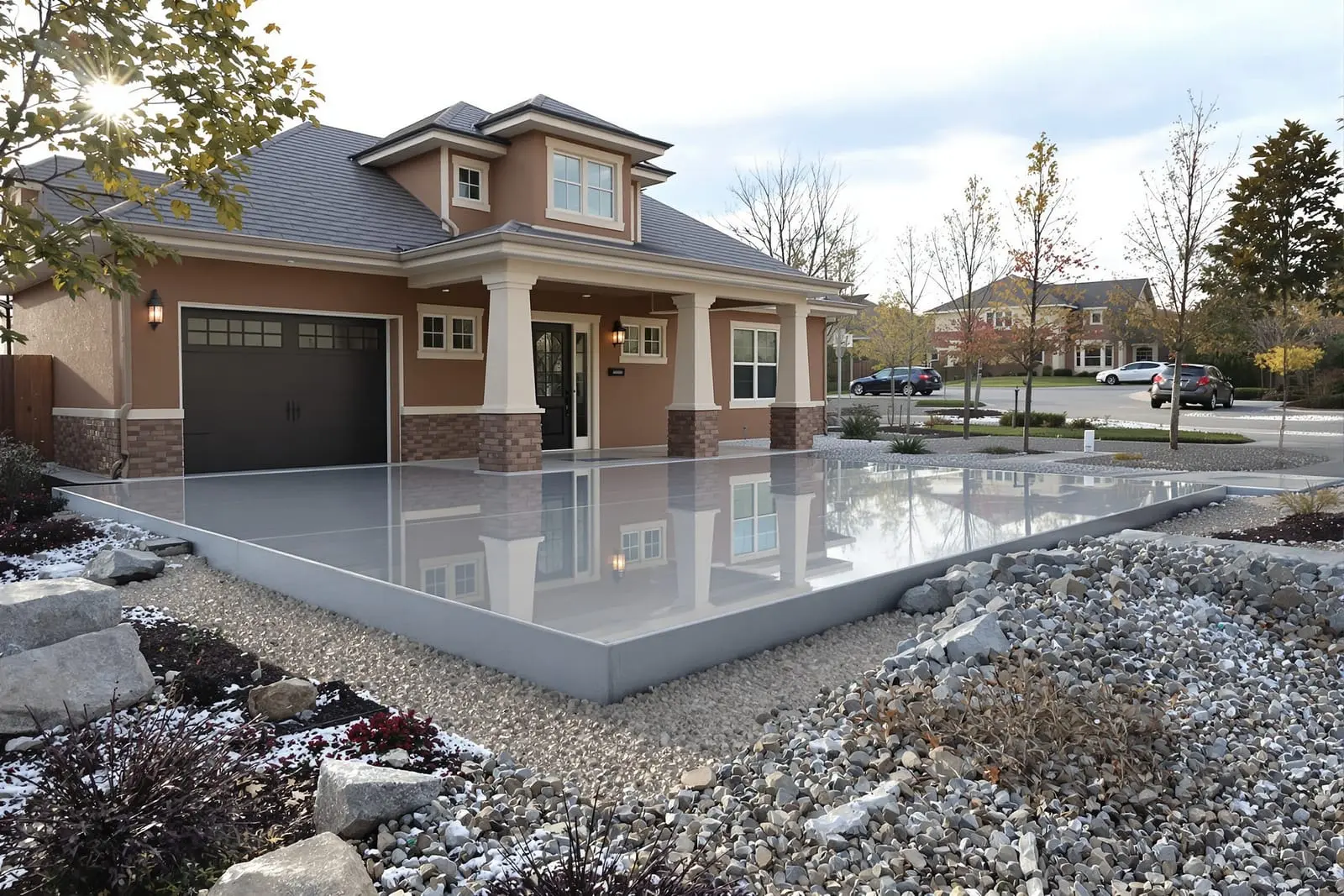
Keep your facility running on reliable surfaces with commercial concrete flatwork in Atlanta, GA. We pour slabs for warehouses, shops, pads, and exterior areas. Our focus is on proper thickness, reinforcement, and finishing for the intended load. Get level, durable flatwork installed on time and to specification.
Primetime Concrete Atlanta provides professional commercial concrete flatwork throughout Atlanta, GA and the surrounding area. Our licensed, insured crew delivers safe, clean, on-time work with a free estimate before anything begins. Call (470) 970-2915 or request your free quote.
Commercial concrete flatwork for Atlanta businesses
Primetime Concrete Atlanta installs and repairs commercial concrete flatwork for properties all over metro Atlanta, including warehouse slabs, storefront walkways, loading docks, and equipment pads. Our focus is simple: slabs and flatwork that stay level, resist cracking, and stand up to heavy use in Georgia heat and storms.
Commercial concrete flatwork is more demanding than residential work. A warehouse slab that carries forklifts and racking has to be designed differently than a sidewalk or a patio. We look at your building use, anticipated loads, soil conditions, and drainage before we ever pour a yard of concrete. That is the only way to avoid curling, settlement, and joint failures a few years down the road.
In the Atlanta area, timing matters. Summer heat speeds up concrete set time, so we adjust mix design, water content, and crew size for early morning or evening pours. In winter, we watch night-time lows and plan for curing protection if temperatures drop. Our crews are used to working around tight commercial schedules, coordinating with other trades, and complying with city and county inspections.
How we build commercial slabs and flatwork that last
Every commercial concrete flatwork job with Primetime Concrete Atlanta follows a clear process that is designed around local soil and weather conditions.
First, we evaluate the subgrade. Many Atlanta sites have a mix of red clay and fill. We proof-roll and compact the base so we are not pouring on loose or organic material. For heavier-duty slabs, like warehouse or manufacturing floors, we typically place 4 to 6 inches of graded aggregate base, compacted in lifts to reduce future settlement.
Next, we set forms and layout. We establish elevations to ensure water runs away from buildings and doorways. On exterior flatwork, we usually plan for at least 1 percent slope to keep water from pooling, which is important during Atlanta's sudden thunderstorms.
Reinforcement is tailored to the use. For sidewalks and light-use pads, we might use welded wire mesh. For warehouse slabs, dumpster pads, or drive lanes that see trucks, we typically install deformed rebar on chairs or use fiber-reinforced concrete along with rebar in high stress zones. On large interior slabs we may design doweled contraction joints to control where the slab moves.
We then place concrete using a mix that matches the project. Most commercial slabs run 4,000 to 5,000 psi, with air entrainment only where freeze-thaw exposure is a concern, such as loading docks or exterior ramps. We pay close attention to water addition on site. Too much water makes finishing easier in the moment but weakens the slab and encourages surface dusting and cracking.
Finishing is not one-size-fits-all. Retail and office entries might get a steel trowel finish with a sealer for appearance. Loading areas often receive a broom finish for slip resistance, especially important during humid Atlanta summers when surfaces can sweat. We cut or saw control joints at calculated spacing based on slab thickness and panel size, which helps prevent random cracking.
Finally, we cure the slab. In hot weather, we often use curing compounds and light moisture retention methods to slow moisture loss, which helps the concrete gain strength and reduces surface checking. Where the owner needs early traffic, such as in busy retail strips, we can use mixes that gain strength faster, but we make sure the curing process still meets structural requirements.
Design and performance options for commercial concrete flatwork
Primetime Concrete Atlanta does not treat commercial flatwork as a basic gray surface unless that is exactly what you want. We can adjust design details so your slab works better and lasts longer for your specific operation.
Thickness and reinforcement are the first major choices. Sidewalks and light-use exterior pads often range from 4 to 5 inches thick. Dumpster pads, loading docks, and drive lanes may need 6 to 8 inches or more, with closer rebar spacing and thicker base material. Cutting corners here is one of the fastest ways to end up with broken edges and fatigue cracking where trucks turn.
Joint layout affects how your slab behaves over years of temperature swings. We design sawcut patterns to keep joint panels as square as the layout allows, and we discuss whether you prefer sealed joints in interior spaces where dust control is important. On large warehouses, we can coordinate joint lines with rack layouts and column lines, which makes material handling smoother and reduces damage at random cracks.
Surface treatments depend on your use and safety needs. Options include simple broom finishes, light expose-aggregate for extra grip on slopes, or hardener treatments for high-traffic interiors. In auto shops or light industrial spaces, we can pair the slab with compatible industrial coatings to improve chemical resistance. For retail and office entryways, we can include decorative saw cuts or colored integral mixes that look more finished but still perform like a commercial slab.
We also pay attention to details like thickened edges at door thresholds, dock leveler pockets, and machine pads. A slab that is flat overall can still fail at a single poorly designed transition. Spending some design time on these locations up front usually saves costly repairs or constant patching later.
What drives cost on commercial concrete flatwork in Atlanta
When we price commercial concrete flatwork at Primetime Concrete Atlanta, we explain what is driving the number so owners and contractors can make informed choices.
Site conditions are often the biggest variable. If your subgrade is soft, holds water, or is full of debris from previous structures, we may need more excavation, base stone, and compaction time. Sites along older industrial corridors in Atlanta sometimes have buried remnants that must be removed or bridged, which affects cost and schedule.
Load requirements and slab thickness are next. A sidewalk for a small strip center is a different project than a truck court that sees loaded semis daily. Thicker slabs, higher psi concrete, more rebar, and doweled joints all add material and labor. We do not oversell thickness where it is not needed, but we will be straightforward about what it takes to keep heavy-use slabs from failing prematurely.
Accessibility and phasing also matter. Working in an active shopping center at night, or pouring inside an existing building with limited truck access, takes more planning, smaller pours, and sometimes pumping. This affects the labor hours and equipment costs, but it may be the only practical way to keep your business open during construction.
Finishing level and tolerances can influence cost as well. Standard broom-finished exterior flatwork is more economical than tightly-toleranced interior slabs where rack systems or machines require flatter floors. If you have specific flatness (FF) or levelness (FL) requirements from an engineer, we will factor the additional checks and specialized finishing into the proposal.
We help you compare options honestly. For example, you might choose slightly thicker concrete with simpler reinforcement instead of a thinner slab packed with rebar. Or you might use a standard mix with better curing practices rather than paying for the highest strength mix where it is not needed.
Common slab problems and how we help Atlanta owners avoid them
Many of the slab problems we get called to fix around Atlanta could have been avoided with better planning and execution. Primetime Concrete Atlanta puts extra effort into prevention so you are not paying for the same work twice.
Cracking is the first concern most owners mention. All concrete cracks to some degree, but random wide cracks usually come from poor joint layout, inadequate subgrade, or adding too much water during placement. We control this by compacting the base properly, designing sawcut spacing to match slab thickness, and monitoring water on site. When cracks do appear, we can often seal or repair them before they turn into trip hazards or structural issues.
Settlement and rocking slabs come from weak or uneven subgrades. This is common on infill sites where old utilities or foundations were removed. We address this by probing and proof-rolling the area before pouring. If we find soft spots, we remove and replace them or bridge them appropriately. For existing settled slabs that you do not want to replace, we can discuss slab replacement options or coordination with a slab lifting contractor where appropriate.
Surface scaling, dusting, and spalling often show up on improperly cured or overwatered concrete, especially in high-traffic zones like entry walks and loading docks. Our crews use controlled water additions, proper finishing timing, and curing methods that fit the weather that week. In exterior areas where deicing chemicals might be used, we recommend appropriate air content and sealers to reduce surface damage.
Poor drainage is another common issue, especially in older commercial centers around Atlanta where flatwork was added in pieces over time. We check how your new slab ties into existing pavement, gutters, and landscaped areas, and we adjust slopes so water is directed to proper outlets instead of toward doors or low spots. Solving drainage right at the concrete stage prevents repeat flooding, algae growth, and slip problems.
If you are planning new commercial concrete flatwork or replacing problem slabs, we are glad to walk your site, point out potential trouble areas, and lay out a practical plan that fits your timeline and budget.
“
Professional commercial slabs & flatwork, done right the first time, quality materials, honest pricing, and results that last.
Primetime Concrete Atlanta
Commercial Slabs & Flatwork Across Our Service Area