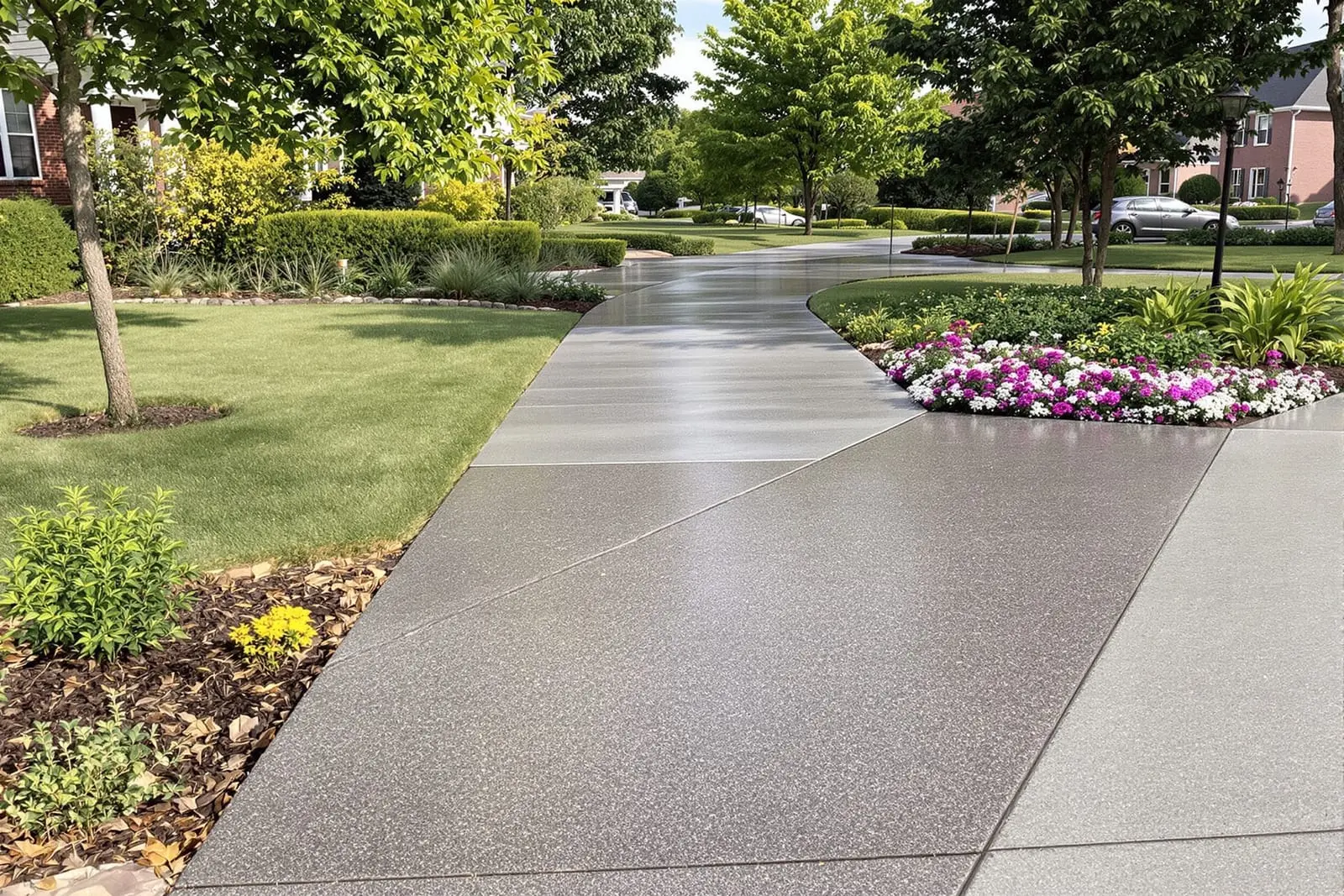
Improve safety and access with concrete walkway installation in Atlanta, GA. We pour sidewalks and paths that are level, slip resistant, and built to handle daily use. From front entry walks to garden paths, our layouts are designed to fit your property. Count on a neat, long lasting finish that ties your outdoor spaces together.
Primetime Concrete Atlanta provides professional concrete walkway installation throughout Atlanta, GA and the surrounding area. Our licensed, insured crew delivers safe, clean, on-time work with a free estimate before anything begins. Call (470) 970-2915 or request your free quote.
Concrete walkways and sidewalks built for Atlanta properties
Concrete walkways and sidewalks are more than a strip of gray between point A and point B. In Atlanta, they deal with hot summers, sudden storms, heavy foot traffic, tree roots, and red clay that shrinks and swells. Primetime Concrete Atlanta designs each concrete walkway installation around those local conditions so it stays safe, drains water correctly, and still looks good after years of use.
We work on everything from simple front walkways in older Atlanta neighborhoods to long sidewalk runs along driveways, side yards, and commercial storefronts. If you have a muddy path where grass will not grow, broken pavers that trip guests, or an uneven city sidewalk that needs replacement to meet current standards, we can lay out a permanent, low‑maintenance concrete solution.
Instead of pushing a one‑size layout, we look at how you actually use the space. For example, we may widen sections near driveways where people step out of cars, or curve the walkway around landscaping beds so it feels natural and avoids future root issues. The goal is a solid, clean walking surface that fits your property and stands up to Atlanta weather.
Our concrete walkway installation process step by step
Every project with Primetime Concrete Atlanta follows a detailed, practical process so you know what is happening on your property and why.
1. Site visit and layout: We start by walking the route with you. We look at slopes, low spots that collect water, existing trees, utilities, and how you enter your home or building. We mark a proposed layout with marking paint or string so you can see the exact path, width, and shape before any soil is disturbed.
2. Measuring slope and drainage: Atlanta’s sudden downpours can pond water on a poorly sloped walkway. We use levels to set a slight pitch away from your house or building and toward grass or drainage areas. Where necessary, we build in transitions to tie into existing sidewalks, driveways, or steps so there are no trip lips.
3. Excavation and base prep: We remove grass, roots, old concrete, and soft soil to the proper depth, usually 4 to 8 inches depending on expected use. On top of the Atlanta red clay, we place and compact a layer of crushed stone or gravel. This base keeps the concrete from settling unevenly and helps water move away, which is especially important in yards that stay damp after storms.
4. Forms and reinforcement: We install wood or metal forms to define edges and curves, then check width and elevation again. For most walkways, we use welded wire mesh or rebar in sections that will see heavier loads or where soil has been unstable. Reinforcement helps reduce cracking and keeps any cracks that do appear tight.
5. Concrete placement and finishing: We order the right mix for the job, typically a 4,000 psi mix for walkways and sidewalks, and pour it directly into the forms. Our crew spreads and screeds the concrete to level, then uses floats to bring up a smooth surface. We finish most walking surfaces with a light broom texture, which provides grip in wet weather while still being comfortable for bare feet.
6. Control joints and edging: While the concrete is still workable, we cut or tool control joints at specific intervals to guide natural cracking. For Atlanta’s temperature swings, this step is important because concrete will expand and contract. We also edge the sides for a cleaner look and help prevent chipping.
7. Curing and cleanup: We protect the new walkway from quick drying, foot traffic, pets, and sprinklers for the first few days. Proper curing greatly increases strength. Once cured, we remove forms, backfill edges with soil or mulch, and leave the site cleaner than we found it.
Design and material options for your new walkway
Concrete walkways do not have to look like basic sidewalk strips. Primetime Concrete Atlanta can build your walkway so that it suits your house style, landscaping, and budget.
Width and layout: Standard walkways are often 3 to 4 feet wide, which is enough for one person. Many Atlanta homeowners prefer 4 to 5 feet near the front entrance so two people can walk side by side or you can move strollers and trash bins easily. Layout can be straight for a more formal look, or curved to soften the yard and move around trees, utilities, or slopes.
Thickness and strength: For most residential concrete walkway installation jobs, 4 inches of concrete is sufficient. If a section will occasionally carry a vehicle, such as a walkway that widens into a small parking pad beside a driveway, we may recommend 5 or 6 inches and added reinforcement.
Surface textures: Broom finish is the standard choice because it is slip resistant in rain and dew. In shaded Atlanta yards that tend to stay damp, we usually do not recommend overly smooth finishes, since they can get slick. We can add decorative borders with a different broom direction or a troweled edge to dress up an otherwise simple slab.
Color and decorative options: If you want something beyond plain gray, you can select integral color mixed into the concrete or a color hardener on top. Popular shades in Atlanta include light tans and charcoal gray that hide dirt and pair well with brick homes. We also offer stamped patterns that mimic stone or pavers. For most customers, we suggest limiting heavy pattern stamping on sloped walkways, because deep textures can be harder to shovel or sweep.
Sealers and maintenance: Once the concrete is cured, you can choose a penetrating sealer to protect against mild staining and weather. In Atlanta’s climate, resealing every few years is usually enough. Routine maintenance is simple, just sweeping and occasional pressure washing, plus keeping de‑icing salts off the surface if you use them during rare ice events.
What affects cost and how we keep projects on budget
Concrete walkway installation costs in Atlanta depend on several real‑world factors, not just a flat price per foot. Primetime Concrete Atlanta is upfront about what drives your total and how we can adjust the design to match your budget without cutting corners on quality.
Length, width, and thickness: More square footage means more excavation, base material, and concrete. A long side‑yard walkway that is 4 feet wide will cost more than a short front entry path. Increasing thickness from 4 inches to 6 inches in select areas for vehicle loading will add to the concrete volume but may be cheaper than reinforcing an entire run.
Site conditions: Steep yards, tight access, heavy tree roots, or the need to remove old concrete, brick, or railroad ties will affect labor time and disposal costs. In many Atlanta neighborhoods, we also work around existing irrigation lines, utility boxes, and tree protection zones, which can slightly increase the complexity of the job.
Soil and base work: On firm red clay with good drainage, standard base prep is usually enough. If your yard has soft fill dirt or low, always‑wet areas, we may need a deeper base with more stone or even fabric underlayment to stabilize the ground. Spending a bit more on this early step prevents sinking, tilting, and cracking over time.
Design and finish choices: Curved layouts, decorative stamping, coloring, or custom borders involve more forming and finishing skill, which adds some labor. We often break down the price so you can see the difference between a straightforward broom‑finished walkway and a decorative option, and then choose based on what delivers real value for your home.
Access and scheduling: Narrow side yards, lack of truck access, or the need to wheelbarrow or pump concrete a long distance can affect price because it adds man‑hours. We look at these details during the first visit so there are no surprises later.
To keep projects on track, we provide a written scope that spells out excavation depth, base material, slab thickness, reinforcement, finish type, and any city sidewalk sections that must meet specific standards. That clarity is especially important if part of your project ties into a public sidewalk or requires coordination with the City of Atlanta or a local HOA.
Issues we solve and what Atlanta homeowners should know
If you already have a cracked, uneven, or tree‑damaged walkway, you are not alone. Atlanta’s tree canopy and clay soil are hard on older concrete. Primetime Concrete Atlanta spends a lot of time fixing problems created by rushed or undersized installations.
Tree roots: Large oaks and maples often heave walkways after a few years. We look at the specific tree species and root paths, then suggest a layout that shifts the walkway slightly, uses root barriers where appropriate, or includes controlled joints near problem areas so movement does less damage. We work carefully to balance walkway stability with tree health and any local tree ordinances.
Trip hazards and code concerns: Uneven slabs at entryways, driveway transitions, or city sidewalk connections can create liability issues. We regrade these areas, set the new slab heights correctly, and add proper joints and slope. Where your walkway ties into a public sidewalk, we pay close attention to height differences and cross‑slope so your property is less likely to draw complaints or notices.
Water and mud problems: Many Atlanta calls involve muddy side yards or pooling water around front steps. A properly sloped, well‑based concrete walkway solves both mobility and drainage problems. In some cases, we may suggest pairing the walkway with a small drain or regraded swale to carry water away from the house and the slab.
What you should ask before hiring: Ask any contractor how deep they excavate, what base material they use, how thick they pour the concrete, and how they handle joints and reinforcement. Vague answers or “we just pour over the ground” are red flags. You should also know how they protect the new concrete from traffic for the first few days and whether they will return to seal or saw‑cut joints if needed.
When you work with Primetime Concrete Atlanta, you get clear answers to those questions and a walkway or sidewalk that fits your property, your budget, and the way you actually move around your home or business.
“
Professional concrete walkways & sidewalks, done right the first time, quality materials, honest pricing, and results that last.
Primetime Concrete Atlanta
Concrete Walkways & Sidewalks Across Our Service Area