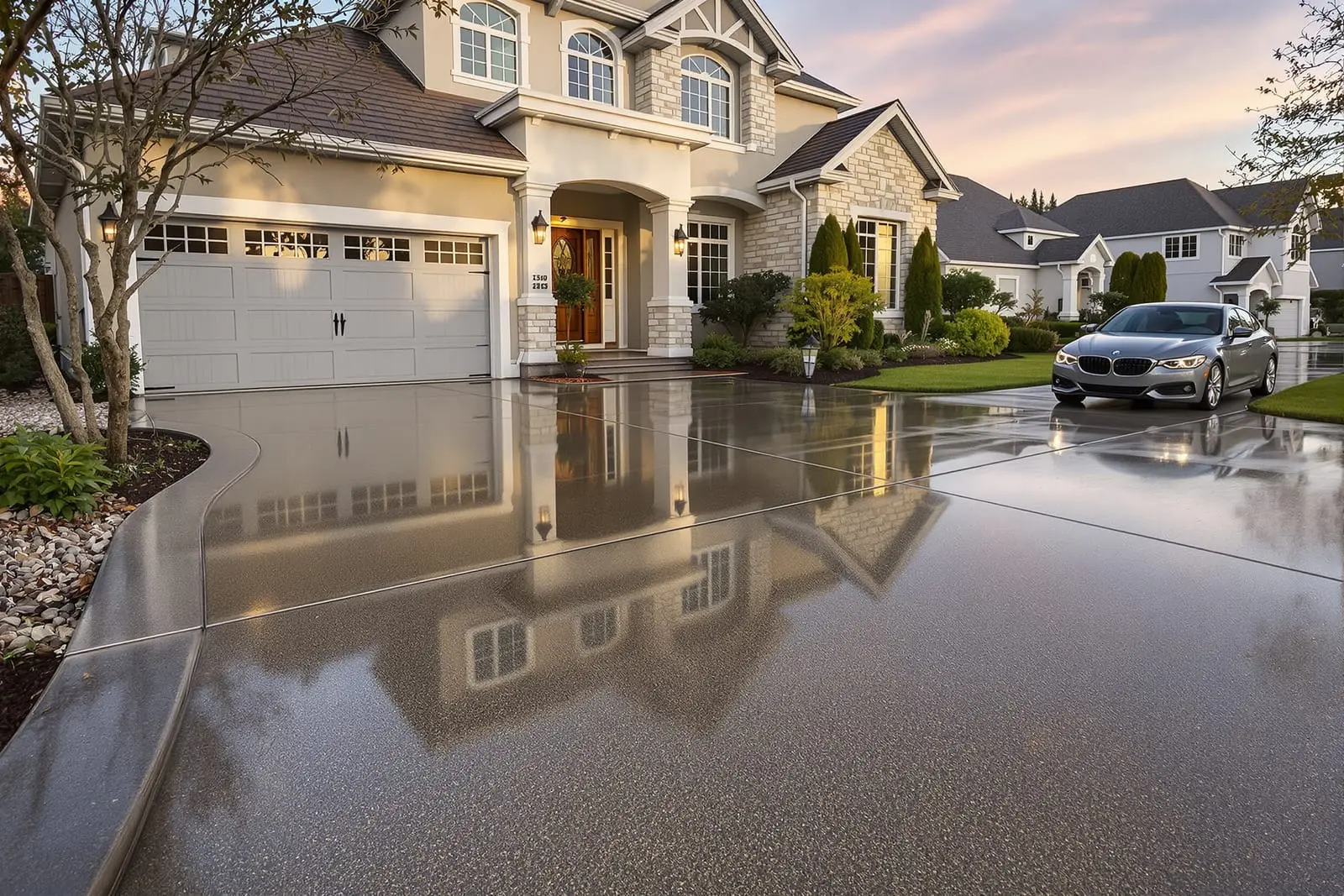
Protect your investment with professional concrete sealing in Atlanta, GA. We apply quality sealers that defend surfaces from moisture, stains, and wear. Regular maintenance keeps driveways, patios, and walkways looking cleaner and lasting longer. Schedule sealing to preserve color, resist damage, and simplify ongoing upkeep.
Primetime Concrete Atlanta provides professional concrete sealing throughout Atlanta, GA and the surrounding area. Our licensed, insured crew delivers safe, clean, on-time work with a free estimate before anything begins. Call (470) 970-2915 or request your free quote.
Concrete sealing in Atlanta’s real weather
Concrete in Atlanta takes a beating. We get heavy summer storms, hard sun, random cold snaps, and red clay that stays damp for days. Unsealed or worn-out concrete soaks up water, stains, and de-icing salts, then cracks and flakes over time.
Primetime Concrete Atlanta uses penetrating and film-forming concrete sealers chosen for how they perform in our local conditions. For driveways and sidewalks, we typically recommend penetrating silane or siloxane sealers that soak below the surface and help repel water and de-icing chemicals without making the concrete extremely slick. For patios, pool decks, and decorative stamped concrete, we often use acrylic sealers that bring out color and add a light sheen, combined with a non-slip additive to keep the surface safer when wet.
If your concrete is newer (28 days or younger), we usually schedule sealing after the concrete has fully cured. For older slabs, we look at prior coatings, visible damage, and moisture levels to decide what type of sealer will bond correctly. Atlanta humidity and afternoon storms matter too. We plan sealing windows when the surface is dry, temperatures are stable, and there is no rain in the forecast for at least 24 hours so the sealer has time to set properly instead of turning cloudy or peeling.
Our step-by-step concrete sealing process
When Primetime Concrete Atlanta seals and maintains your concrete, we follow a clear process so you know what is happening and why.
1. Inspection and testing. We walk the site, check for cracks, scaling, and prior coatings, and look for water pooling. If there is an old sealer, we may do a small solvent test to see if it is acrylic, or a water-drop test to see if the surface still repels moisture. This helps us choose products that will bond instead of peel.
2. Deep cleaning and prep. We pressure wash with the correct tip and pressure for your concrete, then use degreasers on oil or tire marks and spot cleaners on rust or fertilizer stains. For mildew in shady areas, we apply a mild cleaner that targets organic growth without eating the concrete. If the surface is very smooth or has sealer buildup, we may mechanically etch or lightly grind to open up the pores for better sealer penetration.
3. Repairs and joint work. We fill non-structural cracks with flexible concrete crack fillers that move with temperature changes, and we touch up spalling or small holes with patch materials matched to your concrete. We also clean and, if needed, recaulk control joints so the sealed slab can still expand and contract properly.
4. Sealer application. We apply sealer by low-pressure sprayer, roller, or a combination, depending on the surface texture and product. Penetrating sealers are usually sprayed and then back-rolled for even coverage. Acrylic sealers may be applied in two thin coats, not one heavy coat, to avoid bubbles, lap marks, and excess gloss. On driveways with a slope, we work from the top down to control runs.
5. Final checks and cure time. After application, we do a walkthrough to check for missed spots or puddling. Most sealers are dry to the touch in a few hours, but we typically recommend no foot traffic for 24 hours and no vehicle traffic for 48 to 72 hours. In cooler or very humid Atlanta weather, we may extend those times to make sure the sealer cures fully and delivers its full life span.
How Atlanta’s climate affects your concrete and sealer
Atlanta’s climate quietly wears out concrete from several angles, which is why concrete sealing is not a one-time job.
Heavy thunderstorms and standing water: Many Atlanta driveways and patios are surrounded by landscaping and red clay that drains slowly. When water consistently sits on unsealed concrete, it seeps into the surface, carries in contaminants, and increases freeze-thaw stress in colder snaps. A good penetrating sealer helps reduce absorption so water beads up and runs off faster.
Heat, UV, and tire tracking: In summer, driveway surfaces can get extremely hot, especially in full sun and on darker colored or stamped concrete. UV light breaks down lower quality acrylic sealers, which is why you sometimes see yellowing or powdery surfaces. Primetime Concrete Atlanta specifies UV-resistant acrylics and recommends lighter color tints or natural finishes for south-facing slabs to cut heat buildup and extend sealer life.
Freeze-thaw cycles and de-icers: Atlanta may not be Chicago, but we still get cold nights and occasional ice. When moisture inside the concrete freezes, it expands and causes surface flaking or pop-outs. Many homeowners also use de-icing salts in winter, which can be tough on unprotected concrete. The right concrete sealing system creates a barrier against salt and water so the slab is better protected during those swings from 25 degrees at night to 50 degrees the next afternoon.
Pollen, mildew, and shaded areas: Shady north-side patios and areas under trees stay damp and collect pollen, which leads to green or black mildew stains. Sealed concrete is easier to clean, and regular maintenance washes combined with a quality sealer prevent spores from digging into the pores of the slab and becoming permanent stains.
Cost factors and choosing the right maintenance schedule
No two concrete sealing projects are priced the same, and we are upfront about what drives the cost so you can budget realistically.
Key cost factors include:
• Square footage and layout. Larger driveways, wraparound patios, or pool decks take more product and labor. Tight spaces, multiple levels, and lots of edges or steps require extra time for careful cutting in.
• Condition of the concrete. Surfaces with heavy oil staining, layered old sealers, or deep cracks need more prep, which is where much of the labor lives. Sometimes we must strip failing sealers before we can apply a new system that will last. That adds time and materials but prevents you from paying twice when a quick “cover up” peels.
• Sealer type and performance level. Penetrating sealers that handle de-icing salts and repeated freeze-thaw cycles cost more than a basic water repellant. High quality acrylic systems with UV resistance and non-slip additives are more expensive than hardware store sealers. At Primetime Concrete Atlanta, we explain the life expectancy, appearance, and maintenance needs of each option so you get value, not just the lowest bid.
• Access and scheduling. Busy in-town neighborhoods, tight driveways, or properties with limited water access can influence the time needed on site. Weather windows also matter, since we have to plan around rain and humidity.
In terms of maintenance, we generally recommend:
• Driveways and high-traffic areas: re-seal every 3 to 5 years, sooner if you notice water no longer beading on the surface or if you regularly use de-icers.
• Decorative, stamped, or colored concrete: re-seal every 2 to 3 years to keep color rich and protect the surface texture.
• Pool decks: inspect yearly and usually re-seal every 2 to 3 years, especially because of standing water and pool chemicals.
We can put together a simple maintenance plan so you know when cleanings and re-seals should happen instead of waiting until visible damage appears.
Common problems, fixes, and what to ask before you hire
Most of the concrete sealing work Primetime Concrete Atlanta does falls into one of a few problem categories, and knowing them can help you spot issues early.
Peeling or flaking sealer: Often caused by applying film-forming sealers over a trapped moisture layer or incompatible old sealer. The fix is usually to strip the failing product, allow the slab to dry correctly, then re-apply a compatible system in thin coats.
Whitening, cloudiness, or bubbles: This is common when sealing is done right before a rain, in extreme humidity, or with overly thick coats. Sometimes we can correct it with solvent rolling or additional light coats, but badly whitened sealer may need removal and re-application under better conditions.
Slippery surfaces: High gloss sealers, especially around pools and on smooth troweled concrete, can become slick when wet. We solve that by using lower gloss products and adding a fine non-slip aggregate during application, especially on steps and slopes.
Stains that keep bleeding back: Oil, grease, and tannin stains may require multiple treatments and sometimes poultice-type cleaners. In some cases, we recommend accepting a light ghost stain and sealing over it to stop further penetration rather than grinding the surface aggressively.
Before you hire anyone for concrete sealing in Atlanta, it helps to ask a few direct questions:
• What type of sealer are you using, and why that type for my driveway or patio specifically?
• How will you handle existing sealer, stains, or cracks before you apply the new product?
• What is the realistic life expectancy of this sealer in Atlanta conditions, and what maintenance do you recommend?
If the contractor cannot give clear answers, you are taking a gamble with a surface that should last you many years. Primetime Concrete Atlanta is always straightforward about products, prep work, and expectations so you know what you are paying for and how to keep your concrete looking good over the long term.
“
Professional concrete sealing & maintenance, done right the first time, quality materials, honest pricing, and results that last.
Primetime Concrete Atlanta
Concrete Sealing & Maintenance Across Our Service Area