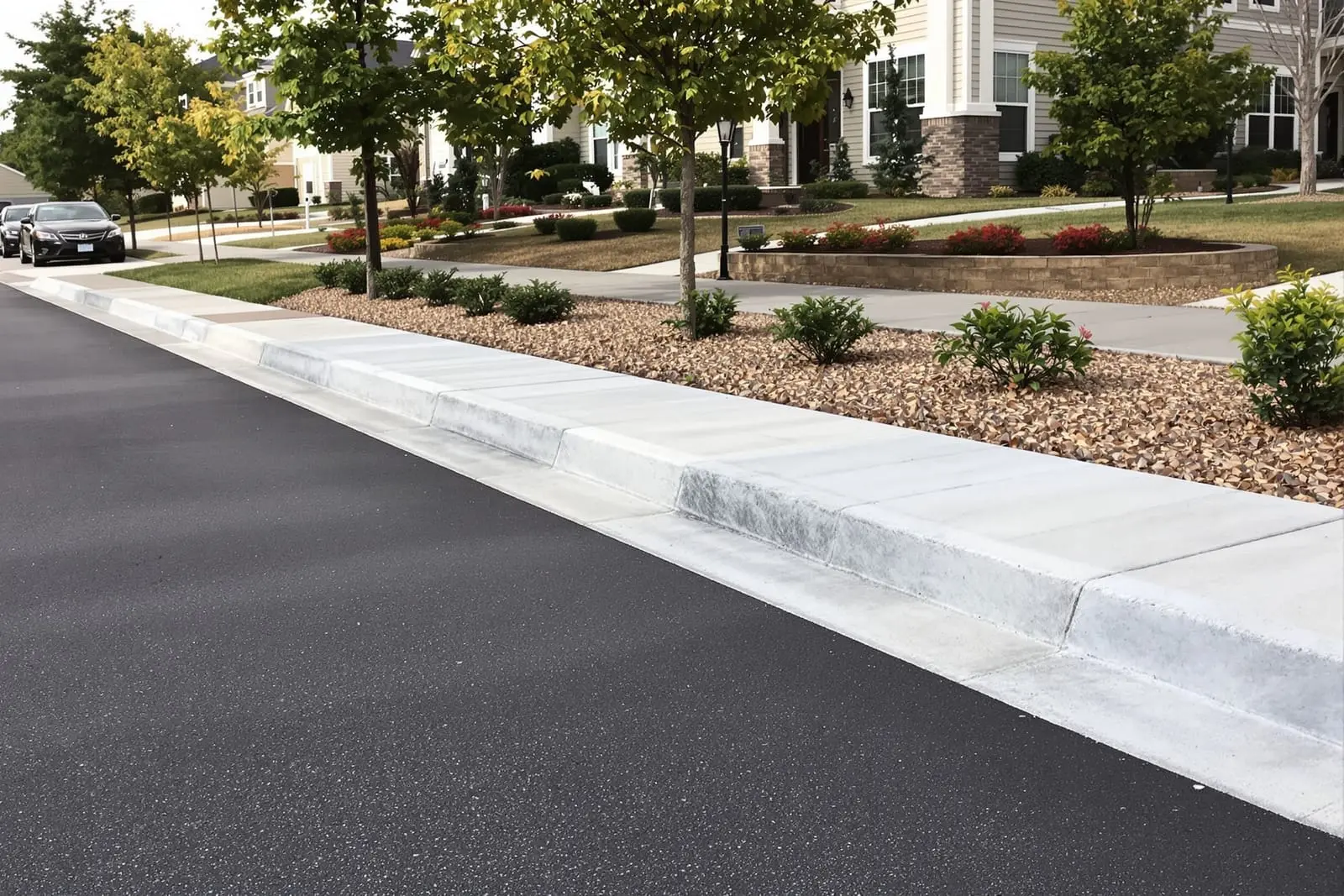
Control traffic and drainage with concrete curb and gutter in Atlanta, GA. We form and pour curbs that shape parking lots, drive lanes, and landscaped islands. Our crews also install barriers and wheel stops that protect buildings and sidewalks. Improve function and appearance with clean, consistent concrete edging.
Primetime Concrete Atlanta provides professional concrete curb and gutter throughout Atlanta, GA and the surrounding area. Our licensed, insured crew delivers safe, clean, on-time work with a free estimate before anything begins. Call (470) 970-2915 or request your free quote.
Precision Concrete Curb and Gutter Installation in Atlanta
Primetime Concrete Atlanta installs concrete curb and gutter systems that are built around how Atlanta streets, driveways, and parking lots actually perform in heavy rain and summer heat. Our crews handle everything from small residential drive approaches to complex commercial and municipal curb lines tied into existing storm systems.
Our focus is on function first, then appearance. A properly built concrete curb and gutter controls water, protects pavement edges from breaking apart, and guides vehicles safely. Whether you manage a shopping center off Peachtree, oversee a subdivision in Gwinnett, or need a clean curb line for a Midtown infill project, we design and install to handle Metro Atlanta traffic, clay soils, and frequent thunderstorm runoff.
We stay current with City of Atlanta, GDOT, and surrounding county standards so your concrete curb and gutter meets the right specifications for height, slope, and thickness. That reduces inspection issues, rework, and long term maintenance costs while giving you a finished edge that looks sharp and holds up under daily use.
How We Build Curbs, Gutters & Concrete Barriers Step by Step
Our process at Primetime Concrete Atlanta is structured to avoid surprises and get the drainage right the first time.
1. Site review and layout: We survey the existing grades, locate existing inlets and utility structures, and mark the proposed curb and gutter alignment. We check for low spots that could hold water and confirm the direction runoff needs to flow. For replacement projects, we document cracking, settlement, and ponding so we can correct the causes, not just pour new concrete.
2. Excavation and subgrade prep: We saw cut the existing pavement edge where needed, remove old curb and gutter, and dig to the required depth. Clay soils common around Atlanta are compacted in layers or replaced with crushed stone where necessary. A stable subgrade is critical to prevent future settlement or random cracking.
3. Forms and reinforcement: We set wood or metal forms to the proper line and grade, then triple check elevations with a level or laser. Reinforcement (usually rebar dowels tying into existing pavement, or wire mesh in certain barrier applications) is installed according to the load requirements and local standards.
4. Concrete placement: We typically use a 3,000 to 4,000 psi mix designed to handle Atlanta temperature swings and traffic. Our crews place and vibrate the concrete to remove voids. For long runs we manage pour breaks at planned construction joints so future cracks follow our joints instead of appearing randomly.
5. Shaping and finishing: The curb face and gutter pan are formed to the specific profile called for by the jurisdiction or site plan. We tool all finish edges, brush the gutter surface for traction, and add control joints at set intervals to manage shrinkage cracking.
6. Curing and protection: We apply curing compound or use wet curing methods depending on weather. Barricades and caution tape keep vehicles off the new work until it reaches proper strength, usually 3 to 7 days depending on traffic loads.
7. Final clean up and inspection: We remove forms, backfill behind curbs, haul away debris, and confirm flow with water testing where appropriate, especially on long runs feeding to inlets.
Design Options for Curbs, Gutters & Concrete Barriers
Primetime Concrete Atlanta can match standard municipal profiles or customize designs for private properties.
Common curb and gutter profiles:
• Standard vertical curb and gutter: Often used along public streets and commercial entrances. Provides a strong barrier for vehicles and clear separation between pavement and landscaped areas.
• Roll or mountable curb: Popular in residential subdivisions around Atlanta. Easier for vehicles to cross for driveway access, but still provides basic edge protection and water control.
• Integral curb and gutter: Curb and gutter poured as one unit with the road edge to reduce seams and improve longevity.
Concrete barrier options:
• Parking lot wheel stops and low barriers: Help prevent vehicles from overrunning sidewalks, landscaping, or retaining walls. We anchor these with dowels so they do not shift over time.
• Median and traffic separation barriers: Cast in place concrete for higher impact protection on private properties, distribution centers, and secured facilities.
Aesthetic variations:
• Color additives or integral color concrete for high visibility edges.
• Broom, trowel, or light exposed aggregate finishes on curb faces where appearance matters.
• Decorative scored joints aligned with architectural features or building facades.
We will review site plans with you, explain what is required by code versus what is optional, and help you choose the curb and barrier types that balance cost, durability, and appearance.
Cost Factors for Concrete Curb and Gutter in Atlanta
The cost of concrete curb and gutter or barriers varies by site, and we explain every cost driver upfront so you can budget accurately.
Key factors include:
• Length and layout complexity: Straight, accessible runs are more efficient. Tight radiuses around islands, frequent grade changes, or intricate parking layouts require more form work and crew time.
• Demolition and removal: Replacing existing curbs involves saw cutting, breaking, hauling, and disposal fees. Older curbs tied into thick asphalt or concrete pavements can take more effort to remove.
• Subgrade and base preparation: Unstable soils, poor drainage, or undocumented fill material may require undercutting and installing stone base. This adds cost but is often necessary to prevent future settlement.
• Mix design and reinforcement: Heavier traffic areas like loading docks or main entrances may require higher strength concrete and more reinforcement. Barriers that must resist vehicle impact get more steel.
• Access and traffic control: Working along active streets, near schools, or in busy retail centers can require flaggers, phasing, or off hours work. These logistical needs affect the total price.
Our estimates from Primetime Concrete Atlanta are line item based. We separate out curb and gutter length, barrier footage, demolition, base work, and any drainage or inlet adjustments so you know exactly what you are paying for. When possible, we suggest phasing or minor design tweaks that maintain function but save cost, such as adjusting curb types in low impact areas.
Handling Drainage, Grades, and Common Problems
Concrete curb and gutter is fundamentally a drainage tool, and Metro Atlanta’s intense summer storms expose weaknesses quickly if the system is not designed correctly.
Common problems we solve:
• Ponding water along the gutter: Often due to improper slope or low spots at transitions or tie in points. We correct this by regrading subgrade and using precise elevation checks along the forms.
• Premature cracking or settling: Typically caused by poor subgrade compaction, lack of joints, or traffic before the concrete reached strength. We use proper joint spacing, compact in lifts, and schedule barricade removal only when the concrete is ready.
• Water bypassing inlets: Inlets set too high, misaligned curb openings, or insufficient gutter slope can allow water to flow past collection points. We coordinate inlet elevations with curb and gutter grades to keep flow directed where it needs to go.
• Damage from snow plows or heavy equipment (occasional in Atlanta but still an issue near logistics hubs): We may recommend thicker sections, added reinforcement, or protective barriers in those high impact zones.
Before we start work, Primetime Concrete Atlanta evaluates upstream and downstream drainage, not just the curb segment you are replacing. This helps avoid creating a new low point that shifts water problems to another part of the property.
Best Timing and Scheduling for Atlanta Projects
Concrete curb and gutter can be installed year round in Atlanta, but certain seasons and conditions can make the process more efficient and less disruptive.
• Spring and fall: These are ideal for most projects. Moderate temperatures allow slower, stronger curing, and there is less risk of surface defects from extreme heat. We can typically achieve consistent finishes with fewer weather delays.
• Summer: High heat and sudden storms are common. In hotter months we adjust mix designs, use set retarders when appropriate, start pours earlier in the day, and increase curing attention to prevent rapid moisture loss and surface cracking.
• Winter: While Atlanta winters are relatively mild, cold snaps can affect early strength gain. For winter pours we may use accelerators, adjust schedules to avoid overnight freezing, and cover new concrete when needed.
From a business operations standpoint, many retail and office properties prefer curb and gutter or barrier work to be done in phases. Primetime Concrete Atlanta can set up a schedule that keeps key entrances open, works around your peak traffic hours, or utilizes weekend or evening work blocks if necessary.
We also coordinate with paving contractors when curb and gutter is part of a larger resurfacing or reconstruction project. Ideally, curb and gutter is installed and cured before final paving, so the asphalt or concrete pavement can tie cleanly into the new edges.
Why Work With Primetime Concrete Atlanta for Curbs, Gutters & Barriers
Primetime Concrete Atlanta focuses on the details that make concrete curb and gutter and barriers last in local conditions, not just look good on day one.
• Local code familiarity: We regularly work with City of Atlanta, Fulton, DeKalb, Cobb, and surrounding municipalities, so we understand their preferred curb profiles, inspection requirements, and standard details. This helps avoid delays and rework.
• Drainage minded approach: We treat every curb and gutter project as part of a drainage system. Our crews are trained to check slopes, inlets, and tie in points, not just follow a string line.
• Commercial and residential capability: We can handle subdivision entrances and HOA streets, standalone commercial pads, distribution centers, and infill urban projects with tight access.
• Realistic timelines and communication: We plan around deliveries, customer traffic, and tenant needs. Before we begin, we explain staging, access limitations, and curing time so you know exactly how the work will affect your site.
When you contact Primetime Concrete Atlanta, we will walk the site with you, discuss how your property is used day to day, and propose a concrete curb and gutter or barrier solution that fits your traffic patterns, budget, and long term maintenance goals.
“
Professional curbs, gutters & concrete barriers, done right the first time, quality materials, honest pricing, and results that last.
Primetime Concrete Atlanta
Curbs, Gutters & Concrete Barriers Across Our Service Area